These are my thoughts after living for one year in a newly built exposed-concrete apartment. I think it depends on the building structure, the area, and other factors, but I hope this helps as one example.
How is the humidity?
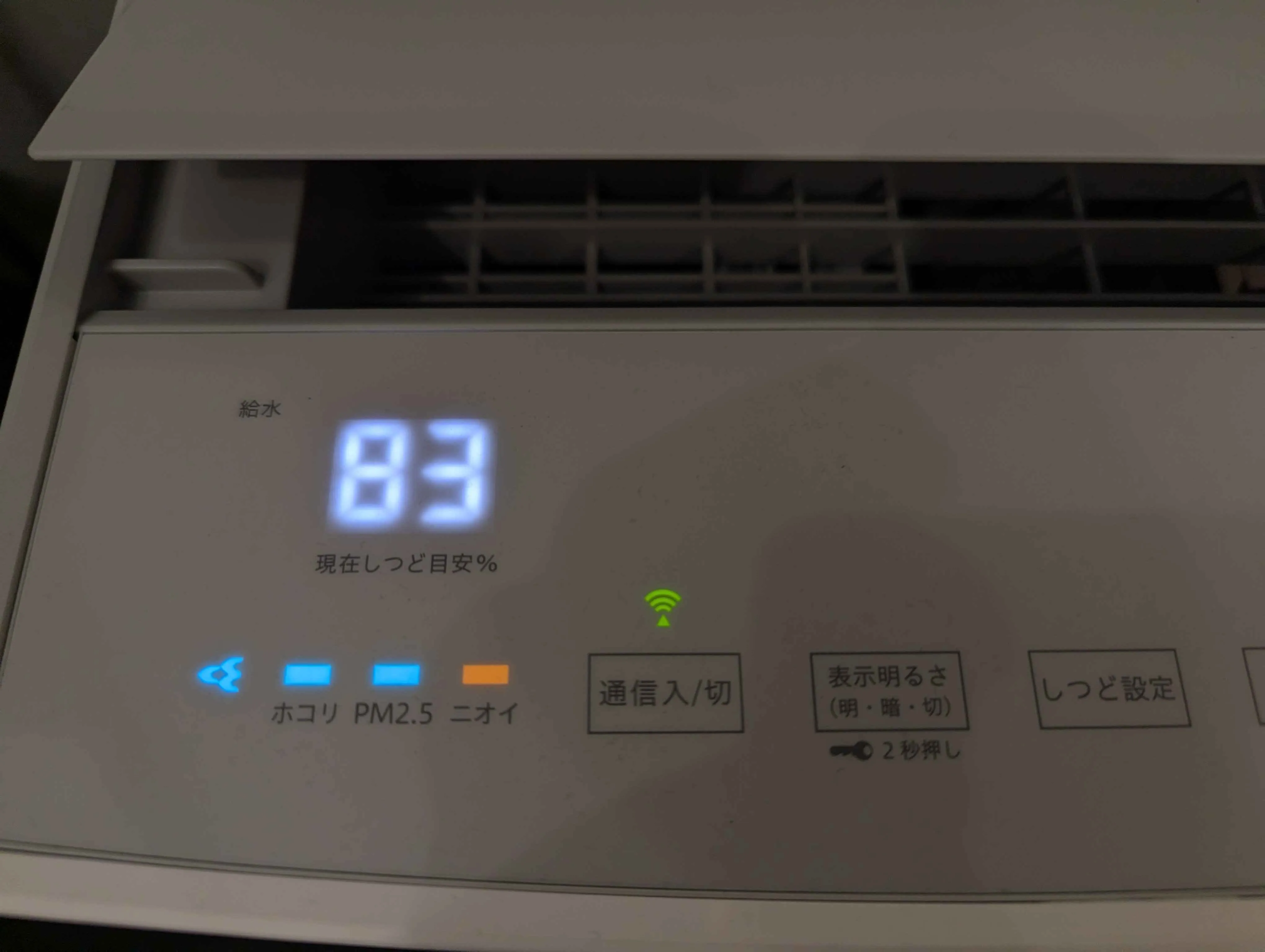
There is this idea that “newly built exposed-concrete apartments tend to get humid because the concrete still contains moisture.” I wondered how true that actually was, so I measured it with the air purifier I have at home.
In summer
Summer is seriously humid.
That said, I think this is because the room is highly airtight. The reason is that even in a normal reinforced-concrete 1K apartment I lived in before, which was not exposed concrete, it felt pretty similar.
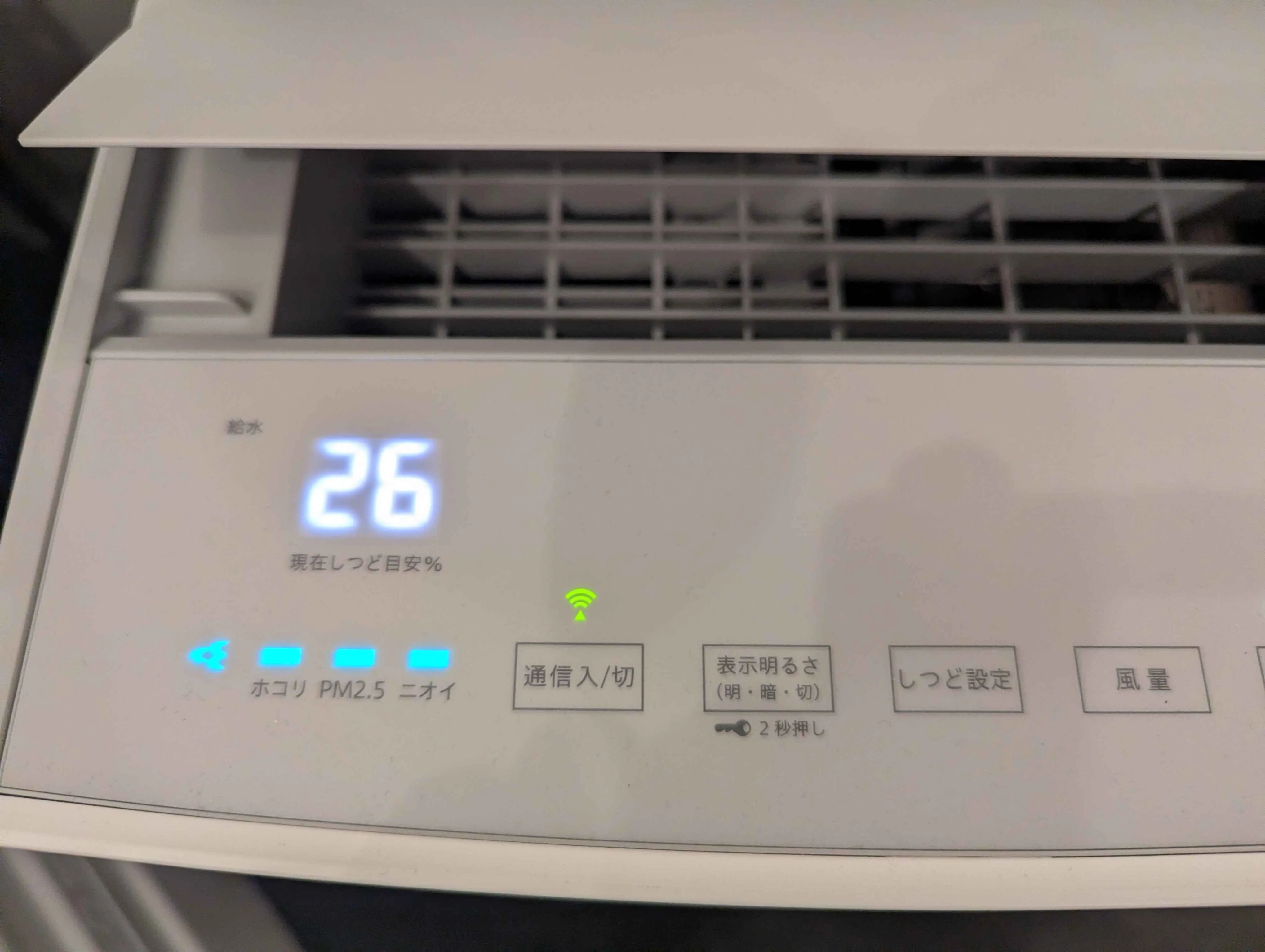
In winter
It gets completely dry, like a normal winter.
Smell
There are also stories about concrete having a concrete-like smell, but as far as my room goes, it has not been a problem.
However, the hallway in the common area might smell. Maybe that is the concrete smell? In my building, the common hallway does not have any windows to the outside, so the fact that the air does not get replaced may also be part of it. (The air is dead.)
Apparently it destroys your mental health
People also say that living in an exposed-concrete room can make you mentally fall apart, but I am doing fine so far. I have appliances, training equipment, and other furniture along the walls, so the amount of concrete that physically enters my field of view is reduced. Maybe that is helping?
It definitely has an inorganic feel to it, so I can imagine some people would be bothered by it.
Cold in winter and hot in summer
There is also the idea that concrete stores heat, so it is easily affected by the outside temperature.
My place is exposed concrete and (probably) does not have insulation, but so far the room has never been extremely hot or cold. I keep the air conditioner on almost all year round when I am in the room, so that may be a big factor too.
On the other hand, the bathroom and hallway in winter are ridiculously cold, so I do wonder if it might be affected to some extent.
The interior concrete walls are basically cool to the touch, and they stay cool even in summer.
This is just a guess, but I wondered if maybe the moisture contained in the concrete evaporates and does a good job of letting heat escape. So I am keeping an eye on whether the feel changes after a few years, once the moisture has fully gone. If anything changes, I will add an update.