Recently, when I moved into a rental apartment, I tried laying floor tiles. It turned out to be much harder than I expected, so I’m sharing it as a casual note.
The floor tiles I used
I chose a loose-lay floor tile called “SOLUM (Solum) MGM-S01-18” that can simply be placed down without adhesive. https://item.rakuten.co.jp/zakka-elements/set54-84/
The product description said that, compared with other floor tiles, these are thicker and more resistant to temperature changes, which sounded good to me.
What I did during installation
First, I laid down anti-mold sheets
I had heard that mold can grow under floor tiles, so I decided to put these down.
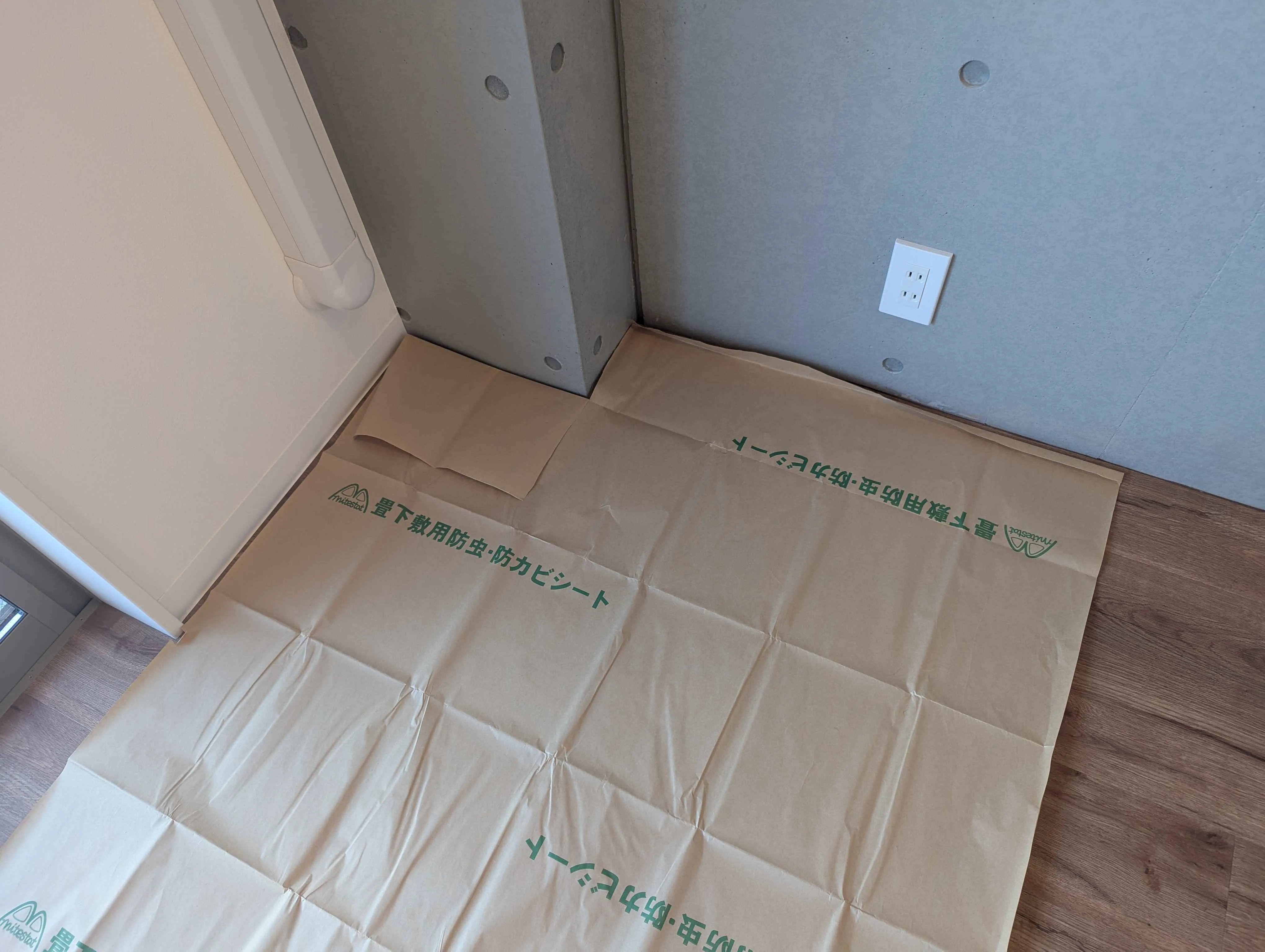
I did a temporary layout to get a feel for the fit
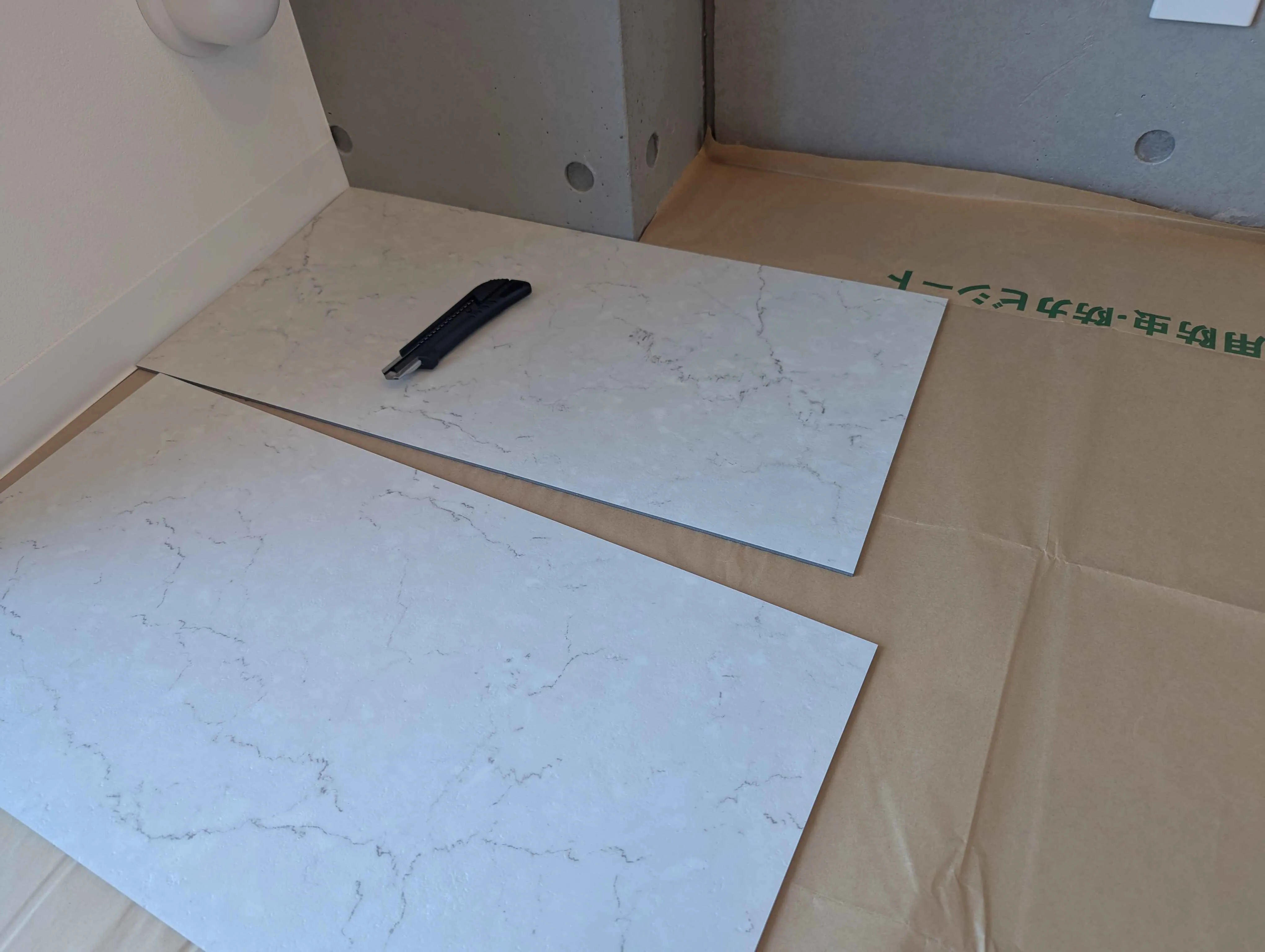
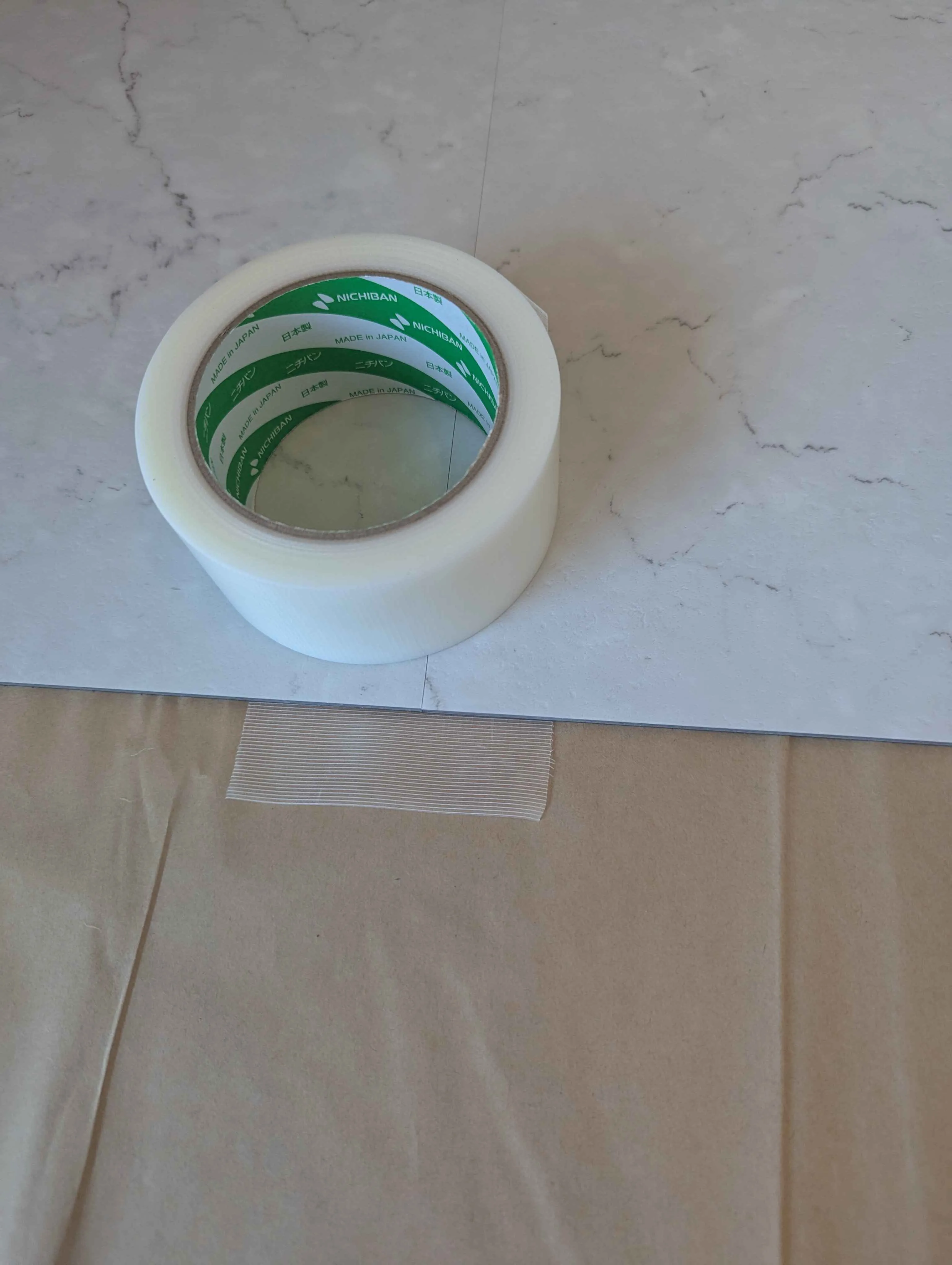
I connected the tiles with masking tape
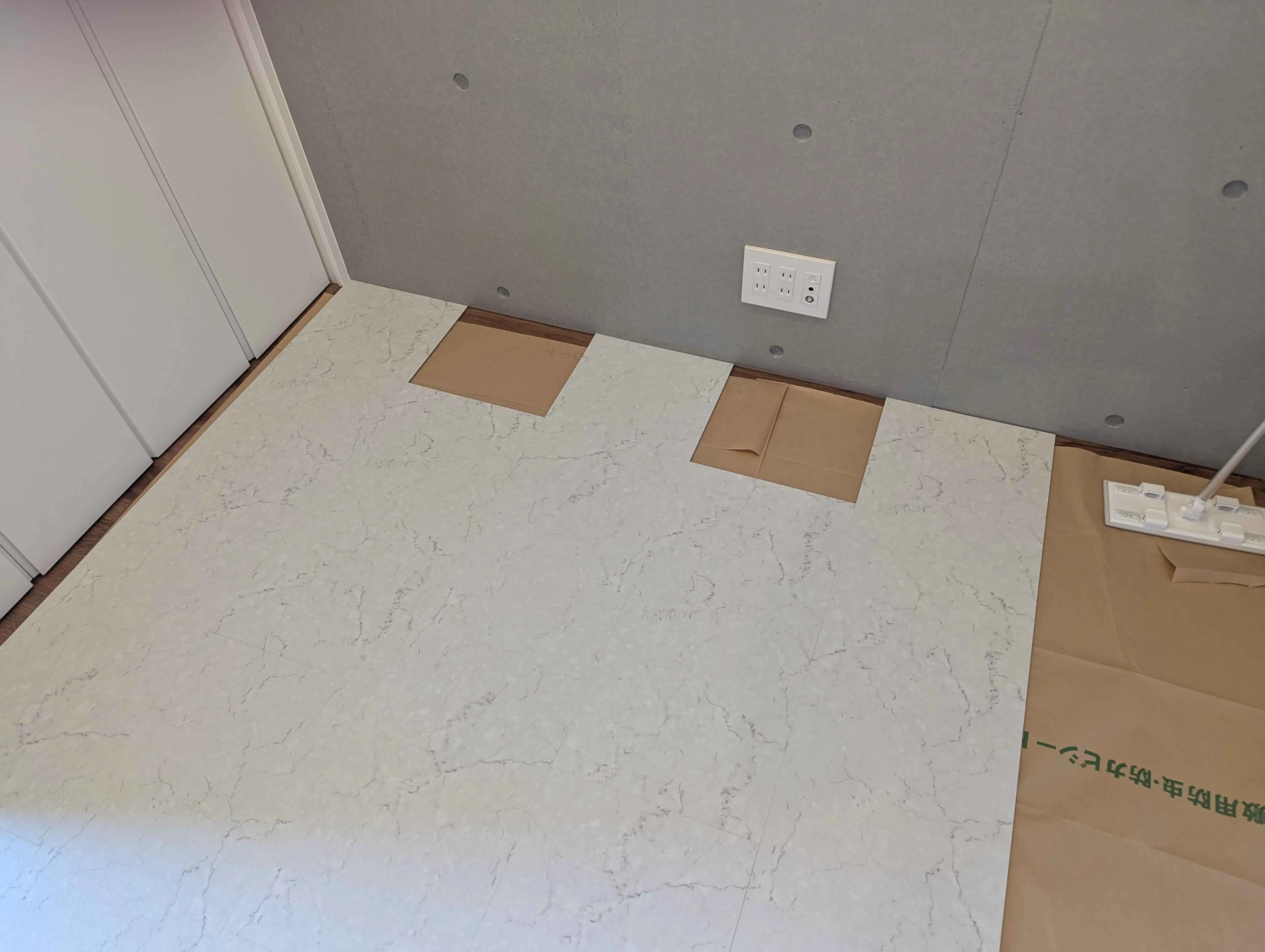
I laid the tiles in a staggered pattern
I saw an article saying that a staggered layout makes tile installation stronger, so I tried it.
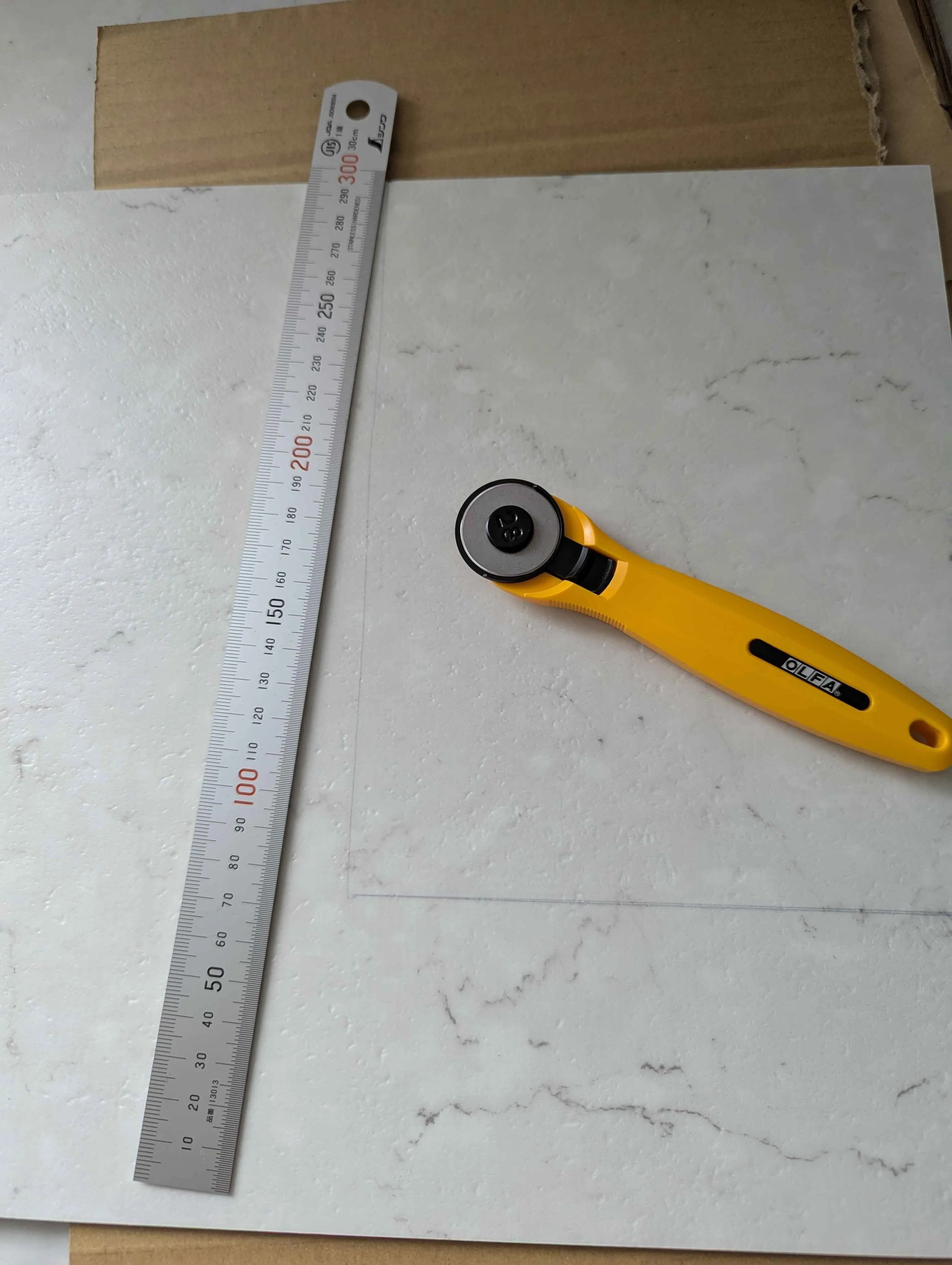
This was seriously hard. I needed to cut small pieces with a utility knife, but the floor tiles I bought were incredibly tough and the blade would barely bite into them.
Trying a rotary cutter
Since a normal utility knife could barely get through, I also tried a rotary cutter. The result: it could not handle the tiles at all, and it became trash in about two minutes. (The blade got crushed when I pressed it against the tile.)
Finished somehow
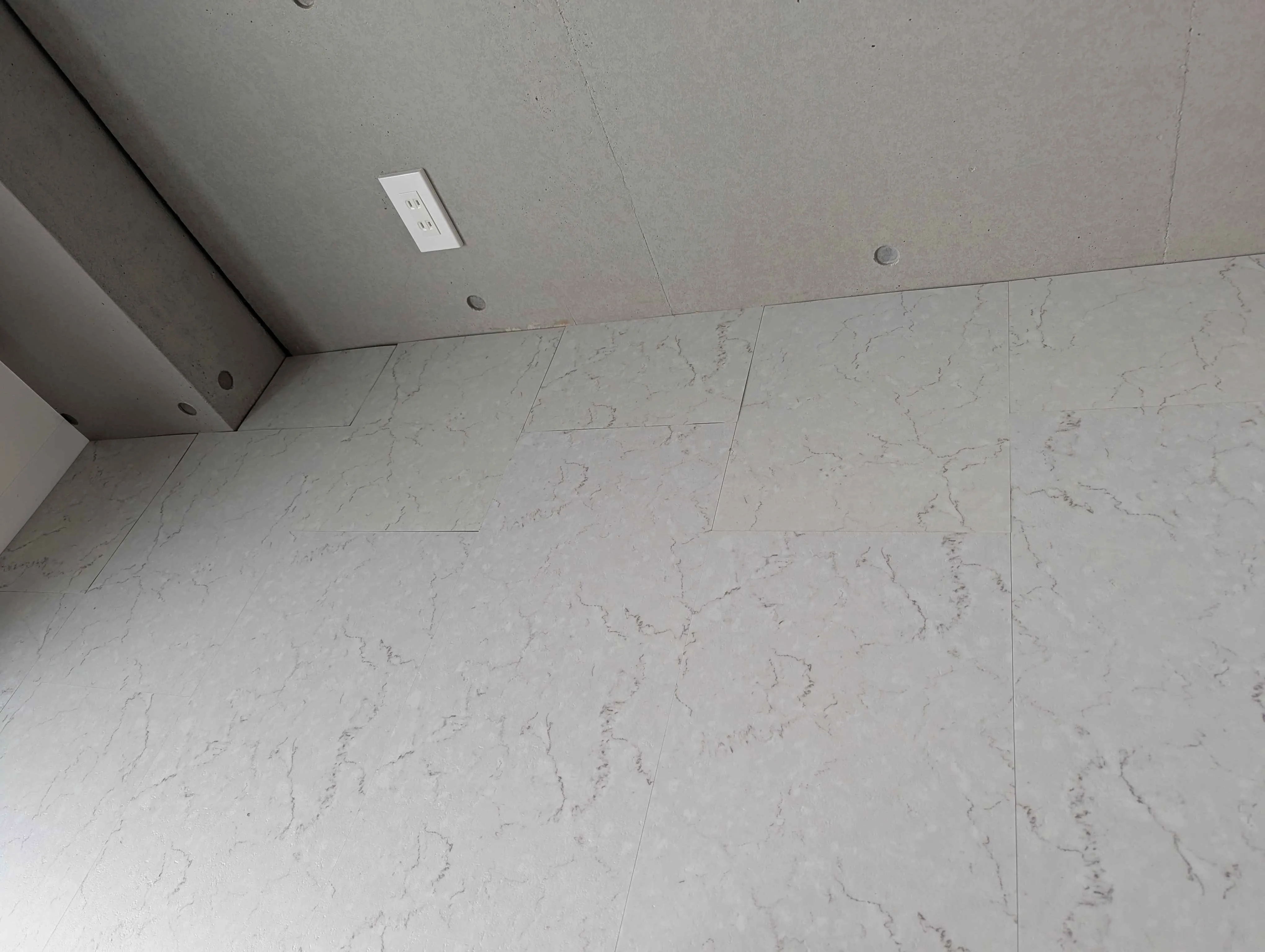
The middle area did not need to be cut with a knife, so I could lay it tightly with no gaps. But the edges had to be cut no matter what, so even though I spent a huge amount of time trying, they ended up with some small gaps.
Things I should have bought
I wish I had prepared some expensive utility knife that cuts reeeeeally well, or something like that. With a normal utility knife sold at a hardware store, I had to run the blade over the same tile around 20 times just to cut one piece, so it was rough. And the blade got dull immediately…
I do not know much about cutting tools, but if there is a tool specifically for cutting tile or other hard materials, you should definitely buy one.
Also, a longer ruler was convenient and helped when cutting, but the ruler itself kept slipping. If there is some product like suction cups for fixing a ruler to the tile, I think it would be worth buying. (I do not know whether such a thing exists, though.)
Things I did not need to buy
- A normal utility knife
- A rotary cutter
Update: impressions after using them for one year
So far, I have been using them without any problems. Even under the chair where I sit for long hours every day while working remotely, I do not see any obvious scratches or dents, so I think they are pretty sturdy.
Small gaps appeared
However, even though I thought I laid them very tightly, gaps appeared here and there at the seams.
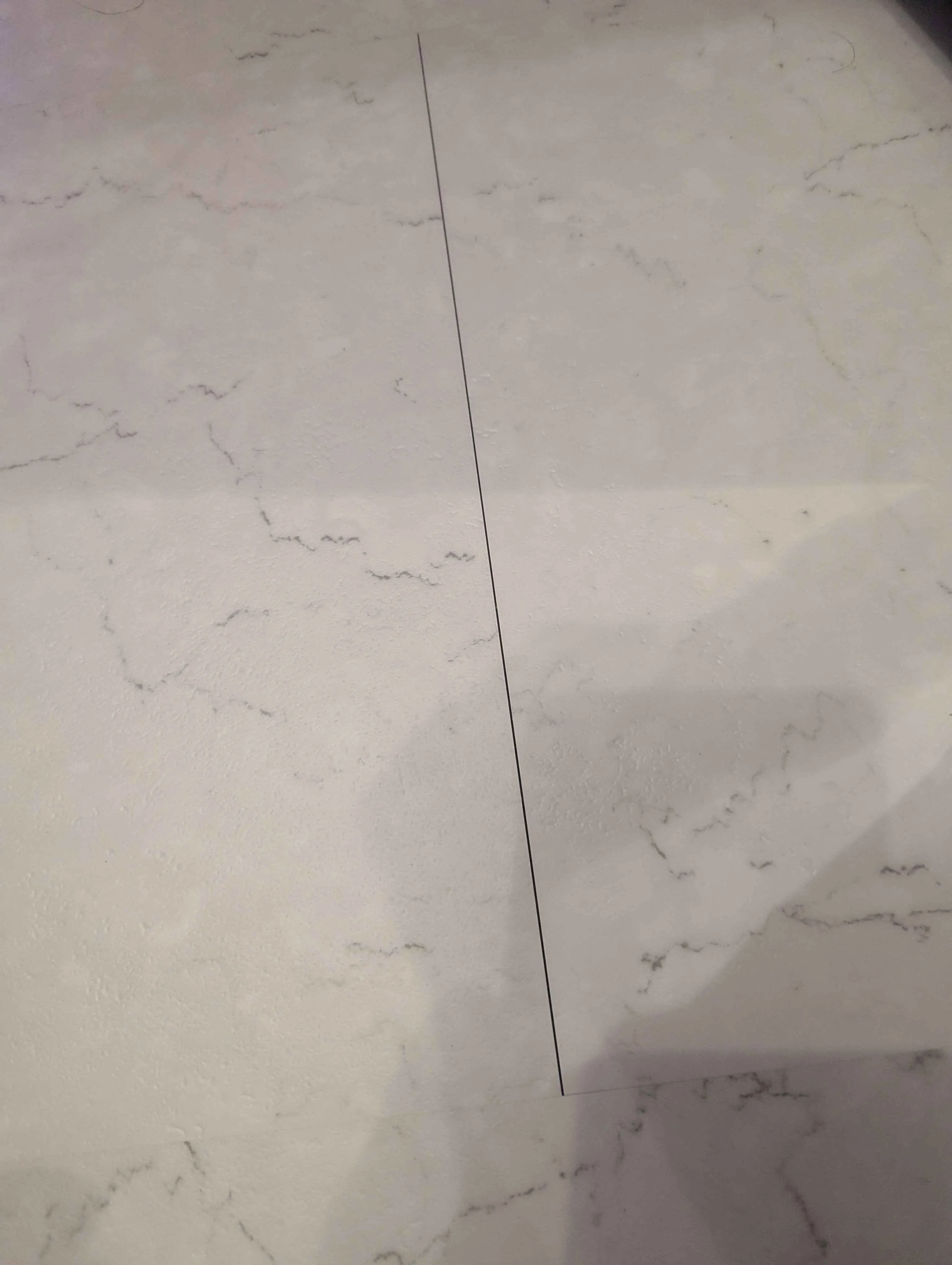
They looked clean for about the first six months, but after summer passed, the gaps gradually started to show. My guess is that the tiles expanded in the heat, and the space left after they shrank back turned into gaps.
That said, the gaps are only wide enough for a Quickle Wiper to pick up dust, so aside from how it looks, they have not caused any trouble.
The places where the anti-mold sheets overlap started lifting
I think this is a problem caused by laying the anti-mold sheets, but the tiles have started to lift a little where the sheets overlap. I think placing furniture changed the load on the tiles, and the gaps forming probably contributed too.
It is not really noticeable unless I pay attention to it, so it is not a problem. But I learned that even if you lay them beautifully at first, they can still lift or develop gaps later.